Why Your Litter Box Smells Worse in Summer (and How to Fix It)
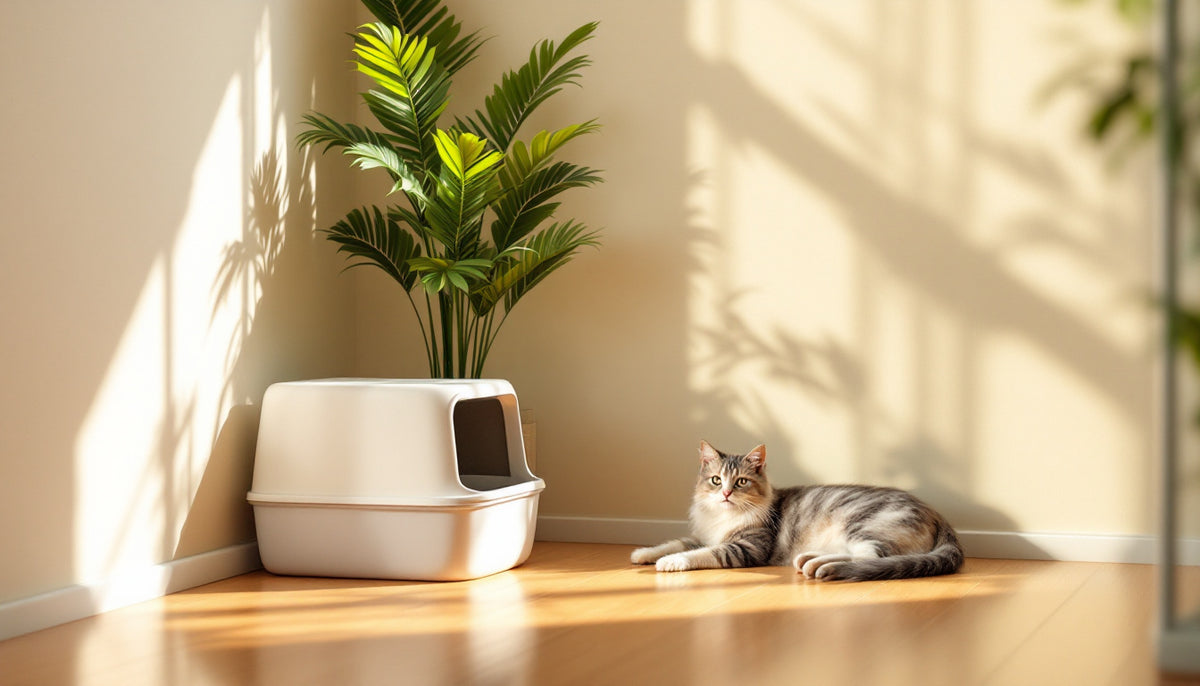
If your cat's litter box suddenly smells worse in summer, it's not your imagination. Heat speeds up the bacterial reaction that turns cat urine into ammonia — roughly doubling with every 18°F rise in temperature — and humid air feeds odor-causing bacteria while holding smells in your home instead of letting them fade. The fix is a tighter warm-weather routine: scoop twice a day, change litter more often, keep the box out of hot, stuffy spots, and use continuous odor elimination instead of perfume.
We hear this one every July. The box hasn't changed, the cat hasn't changed, the litter hasn't changed — but the house smells like a litter box. Here's what's actually going on, and the summer routine we use in our own homes.
Why does the litter box smell worse when it's hot?
The sharp smell coming off a litter box is mostly ammonia. Bacteria in used litter break down urea — a compound in cat urine — and release ammonia gas as they work. That's true year-round. What changes in summer is speed.
Chemical reactions run faster in warm conditions; as a rule of thumb, the rate roughly doubles for every 10°C (18°F) increase. A box that produced a manageable amount of ammonia in your 68°F winter living room produces noticeably more in an 80°F summer one, from the same amount of waste.
Humidity makes it worse in two ways. Damp air settles moisture into the litter, giving odor bacteria the wet environment they thrive in. And humid air holds odor molecules longer, so instead of dissipating, the smell lingers and drifts — warm air rises and circulates, carrying it beyond the litter box corner.
Scoop more often in hot months
The single biggest lever is removing waste before heat can amplify it. If you scoop once a day the rest of the year, move to twice daily in summer — morning and evening takes under a minute each. In multi-cat homes, twice a day is the floor, not the target.
This also stretches your litter further, since clumps sitting in the box keep releasing odor and dampen the litter around them.
Put litter changes and box washing on a summer schedule
Clumping litter that normally lasts two to three weeks with daily scooping breaks down faster in heat and humidity. In summer we suggest:
- One cat: full litter change every 1–2 weeks instead of every 2–3.
- Multiple cats sharing a box: weekly.
- Box washing: mild dish soap and warm water at every change. Skip ammonia-based cleaners and strong bleach — ammonia smells like urine to cats and can put them off the box entirely.
- Litter depth: keep it around 3–4 inches. Too shallow and urine pools on the bottom of the box; too deep and waste gets buried without clumping properly.
Move the box out of hot, stuffy spots
A litter box in a warm laundry room, a sun-baked corner, or a closed closet is working against you all summer. Every degree matters when the underlying chemistry is temperature-driven. Aim for the coolest, best-ventilated spot your cat will accept — away from heat-generating appliances and out of direct afternoon sun. A quiet corner with airflow beats an enclosed cabinet, even if the cabinet hides the box better.
If you're working with limited square footage, we wrote a full guide to getting rid of litter box smell in a small apartment.
Add odor elimination that runs around the clock
Even a perfect scooping routine leaves gaps — the eight hours you're at work on a 90°F day is plenty of time for ammonia to build. That's the gap the Ladnut Cat Litter Odor Deodorizer is built for. It's a compact electronic unit that sits near the box and neutralizes odor molecules with ozone and negative ions, rather than covering them with fragrance.
The part we're proudest of is the smart sensor: it detects when your cat comes within about 2 meters and pauses ozone output until they've left the area. Odor control runs when the box area is empty; your cat is never in the middle of it. At $32.99 it costs less than most people spend on deodorizing litter add-ons in a season. You can read more about how we test and stand behind our products in our Trust Center.
What not to do
A few common summer moves that backfire:
- Masking with heavy fragrance. Scented sprays and plug-ins layer perfume over ammonia — and strong scents can deter cats from using the box.
- Sealing the box in an enclosed space. Hoods and closets trap heat and humidity right where you don't want them, concentrating odor inside the box your cat has to step into.
- Cutting litter depth to save money. Shallow litter lets urine hit the plastic, which absorbs odor over time and is much harder to fix than a full change.
Frequently asked questions
Why does my litter box smell like ammonia in summer?
Bacteria break down urea in cat urine into ammonia gas, and that reaction speeds up in warm weather — the same box produces more odor, faster, when temperatures rise.
How often should I scoop the litter box in summer?
At least twice a day in hot months — once in the morning and once in the evening. Scooping removes odor at the source before heat can amplify it.
How often should I fully change the litter in summer?
With clumping litter and one cat, every 1–2 weeks in summer instead of the usual 2–3. Multi-cat households sharing a box should change weekly and wash the box with mild soap each time.
Is an ozone litter box deodorizer safe to use around my cat?
The Ladnut Cat Litter Odor Deodorizer has a smart sensor that pauses ozone output whenever a pet is detected within about 2 meters, so it only runs when the box area is empty. Use it as directed.
Does baking soda help with summer litter box smell?
A thin layer of unscented baking soda under fresh litter can absorb some odor, but on its own it can't keep up with the faster ammonia production of hot, humid months.
Where is the best place to put a litter box in summer?
The coolest, best-ventilated spot your cat will accept — away from sunny windows, heat-producing appliances, and enclosed closets that trap heat and humidity.
The Ladnut Cat Deodorizer is an electronic device; its sensor pauses ozone output when a pet is detected within ~2 meters. Use as directed and keep out of reach of small children.