How to Get Rid of Cat Litter Box Smell in a Small Apartment
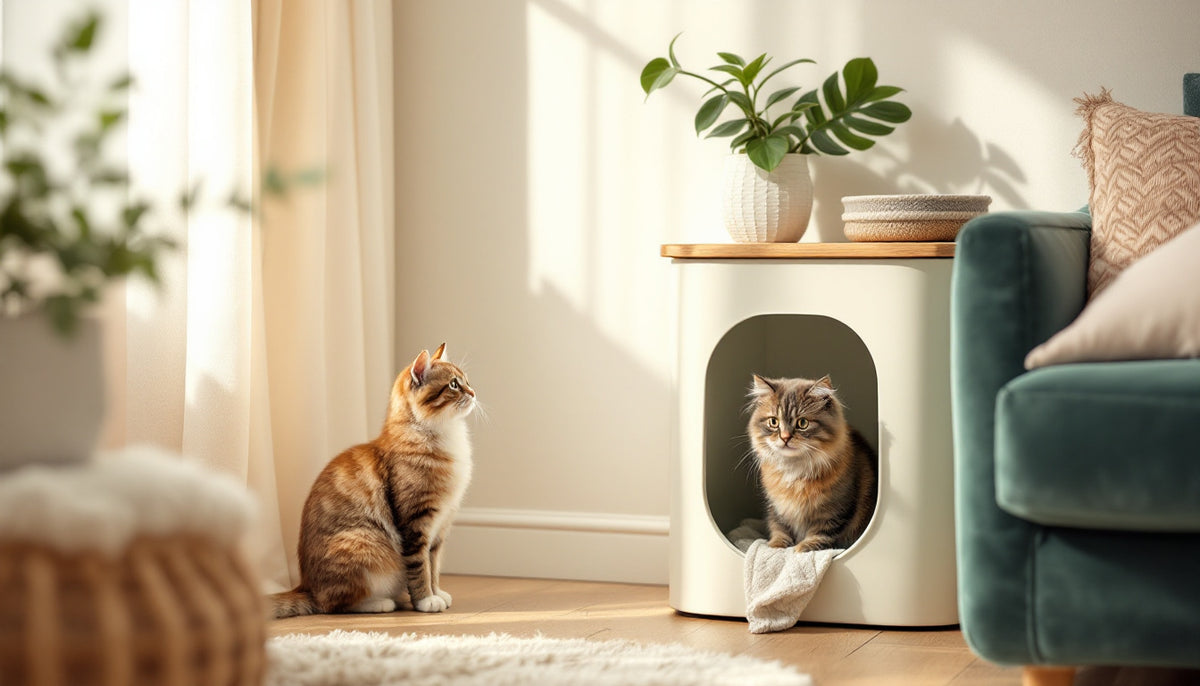
The fast answer: To keep litter box smell out of a small apartment, attack it at the source and in the air. Scoop at least twice a day, keep 2–3 inches of fresh litter, follow the N+1 rule (one box per cat, plus one), put the box in a ventilated low-traffic spot, and neutralize what's left with baking soda, activated carbon, or an air cleaner near the box. In a tight space the whole game is removing waste quickly and treating the air — not spraying perfume over it.
We hear this one constantly from cat people in studios and city one-bedrooms: the box is clean, but the room still turns the moment a friend walks in. Small spaces hold less air, so the ammonia from cat urine concentrates fast and lingers. The good news is that a few small habits make a bigger difference than any single gadget. Here's the routine we'd actually follow.
Why does a small apartment smell faster?
It's mostly math. A studio has a fraction of the air volume of a house, so the same amount of odor reads as much stronger. Cat urine also breaks down into ammonia within hours, and that's the sharp smell that travels. When there's nowhere for it to dissipate — few windows, one room, soft furniture that holds scent — it builds. So in a small space, speed matters more than anything: the faster waste leaves the box and the air gets treated, the less there is to notice.
Scoop more often than you think
This is the single highest-impact habit, and most people under-do it. Veterinary guidance is to scoop solid waste at least once a day; in a small apartment, twice a day keeps ammonia from ever getting a foothold. Once a week, dump the litter, wash the box with mild unscented soap, and let it dry fully before refilling.
- Keep 2–3 inches of litter. Too little and urine pools at the bottom instead of clumping; too much and cats find it unstable.
- Consider a stainless steel box. Plastic absorbs odor over time and gets harder to clean; stainless rinses clean and doesn't hold smell.
- Skip heavily scented litter. Many cats dislike it, and the perfume-plus-ammonia combination often smells worse, not better.
Yes, the N+1 rule applies even in a studio
The vet standard is one litter box per cat, plus one extra — so two boxes for one cat, three for two cats. It sounds like a lot for a small place, but more surface area means each box stays cleaner between scoops, which directly lowers odor. If floor space is tight, a covered or top-entry box tucks into a corner and contains smell better, as long as you keep it scooped and ventilated. Place boxes in different spots rather than side by side; cats treat two adjacent boxes as one.
Placement and airflow do half the work
Put the box somewhere quiet and low-traffic but ventilated — a bathroom with an exhaust fan or a laundry nook is ideal. Run the fan or crack a window for a few minutes after scooping to move stale air out. Avoid burying the box deep in a closet with no airflow; that traps odor and can also make a cat avoid the box, which creates a much bigger problem.
Neutralize the air instead of masking it
Sprays and plug-ins mostly add a second smell on top of the first. It's more effective to neutralize odor molecules. A thin layer of baking soda under the litter absorbs odor without bothering your cat, and activated carbon (in filters or pouches) traps the odor compounds sprays can't touch.
For the air itself, an odor device placed near the box helps in a way passive products can't. Our Cat Litter Odor Deodorizer is a small electronic unit that uses ozone and negative ions to help break down and settle the airborne molecules behind that sharp litter smell, so a small room reads fresher between scoops. It's built with a pet-safe sensor that pauses output whenever your cat comes within about two meters, so it can sit near the box and do its job without running while your cat is using it. Think of it as the air-side complement to good scooping habits — not a replacement for them.
If you're setting up a calmer, lower-maintenance home for a cat (or an aging one who's pickier about a clean box), it's worth pairing a device like this with the daily routine above. You can read more about how we vet and test what we sell on our Trust Center.
A simple small-apartment routine
- Morning: scoop, run the bathroom fan a minute.
- Evening: scoop again, top up litter to 2–3 inches.
- Continuously: baking soda or carbon under the litter; an odor device running near the box.
- Weekly: empty, wash, and fully dry the box; refill fresh.
Do those four things and the “my whole apartment smells like cat” problem usually disappears within a few days.
Frequently asked questions
How often should I scoop in a small apartment?
At least twice a day. Less air volume means odor concentrates quickly, so frequent scooping is the most effective thing you can do.
Does baking soda actually help with litter smell?
Yes. A thin layer under the litter absorbs odor molecules and is safe and scent-free, so it won't deter your cat the way perfumed litter can.
How many litter boxes do I need for one cat?
Vets recommend the N+1 rule: one box per cat plus one extra, so two boxes for a single cat. More boxes stay cleaner between scoops, which lowers odor.
Is the Ladnut Cat Litter Odor Deodorizer safe around my cat?
It has a pet-safe sensor that pauses output when a pet is detected within about two meters. Use it as directed and place it near the box, not inside it.
Are scented sprays a good fix for litter odor?
Usually not. They tend to layer a second scent over the ammonia smell rather than remove it, and many cats dislike the fragrance. Neutralizing with carbon, baking soda, or an air device works better.
Where should I put the litter box in a studio?
A quiet, low-traffic, ventilated spot — a bathroom with an exhaust fan or a laundry nook. Keep it away from your cat's food and bed.
The Ladnut Cat Deodorizer is an electronic device; its sensor pauses ozone output when a pet is detected within ~2 meters. Use as directed and keep out of reach of small children.